Movie:
Spectral
Year:
2016
Director:
Nic Mathieu
Production designer:
Tom Meyer
Project Details:
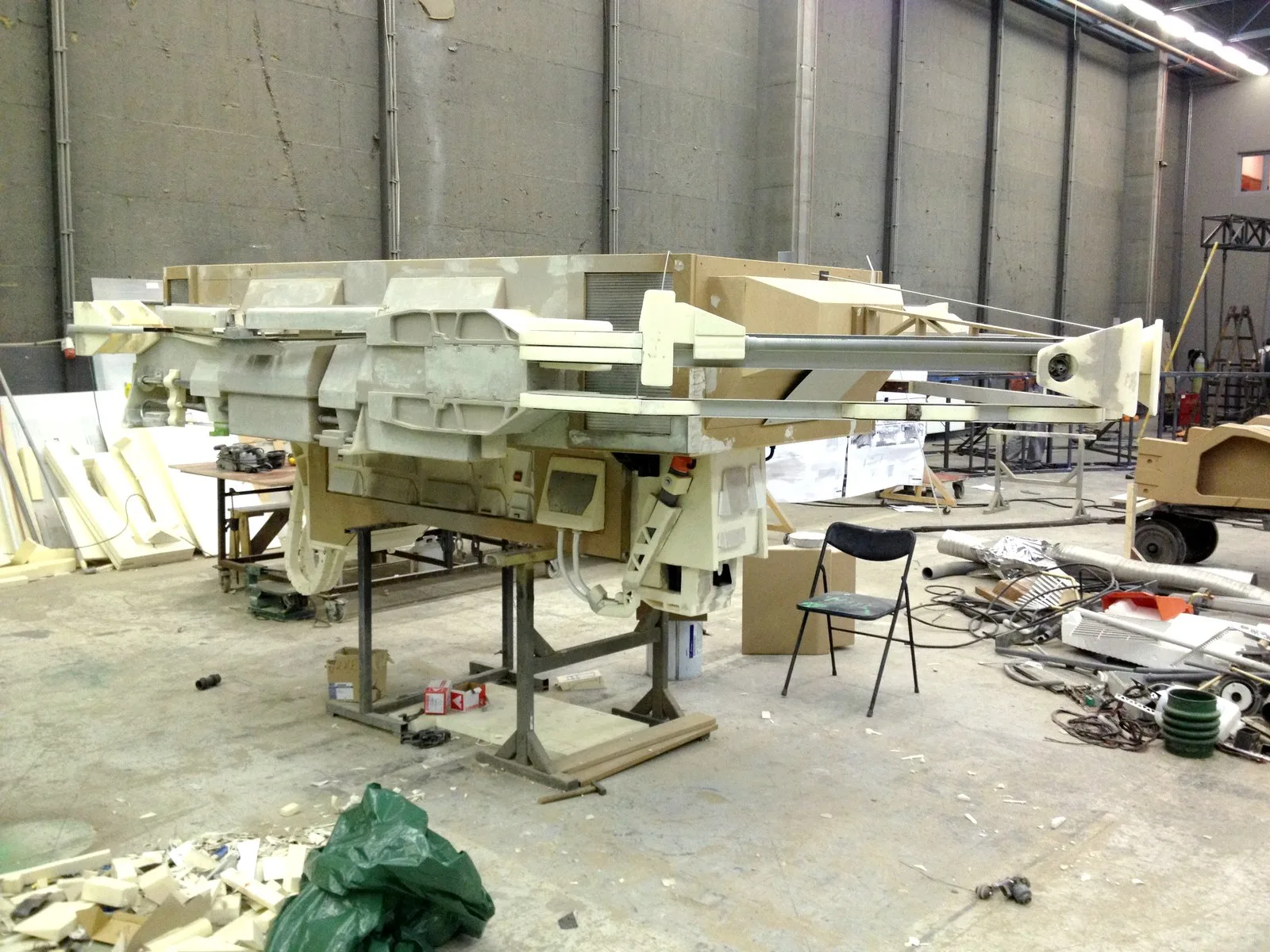
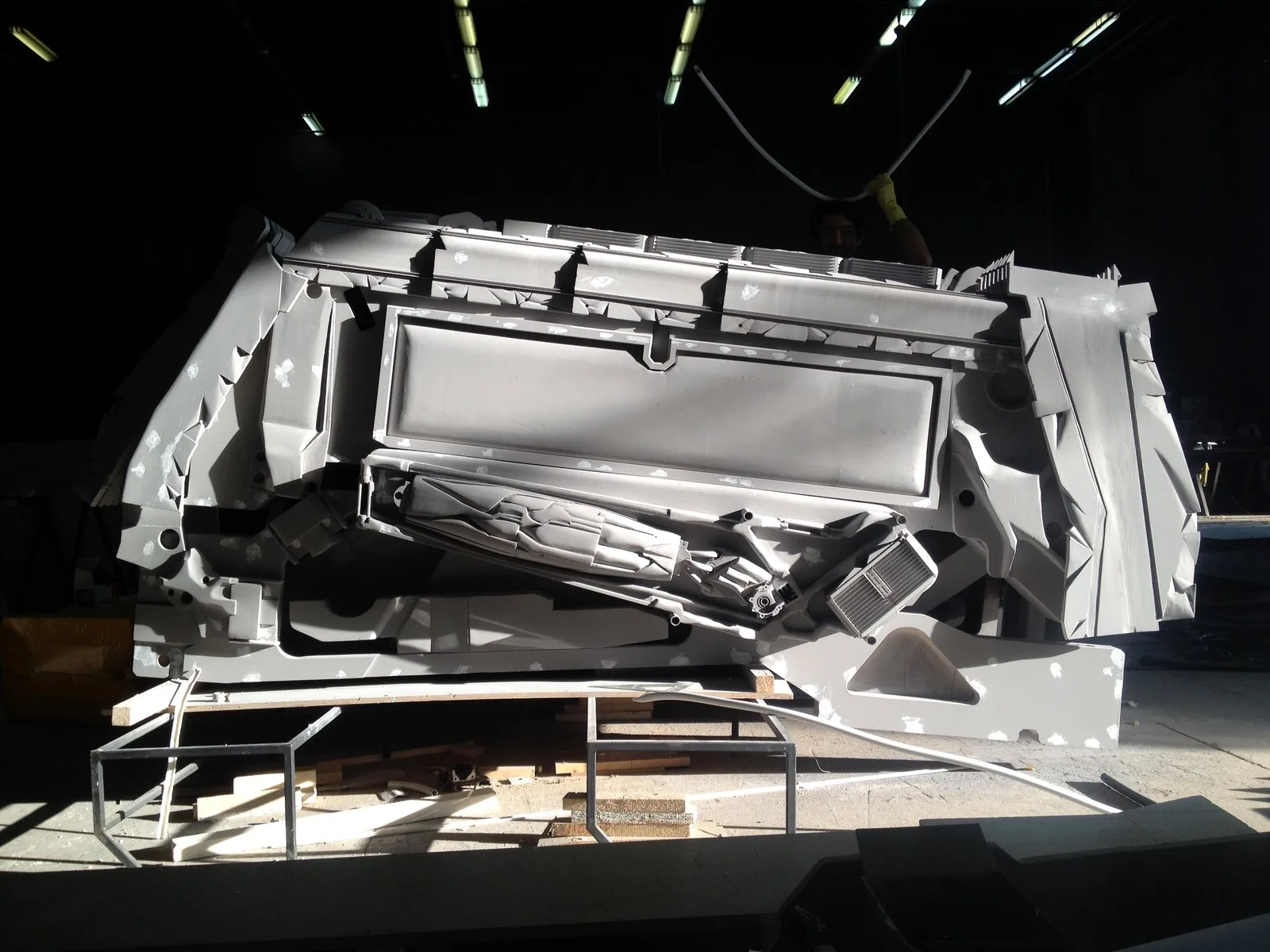
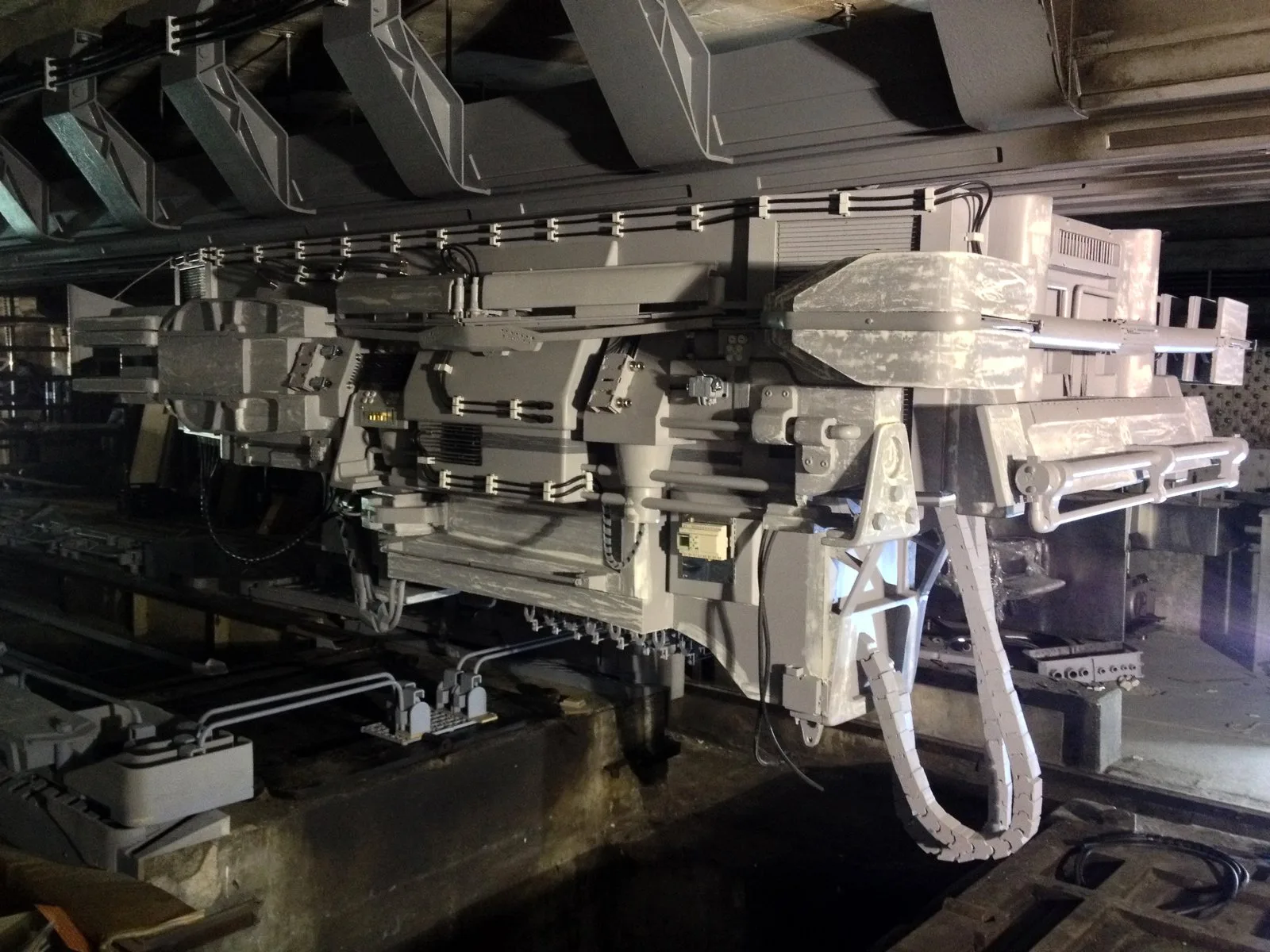
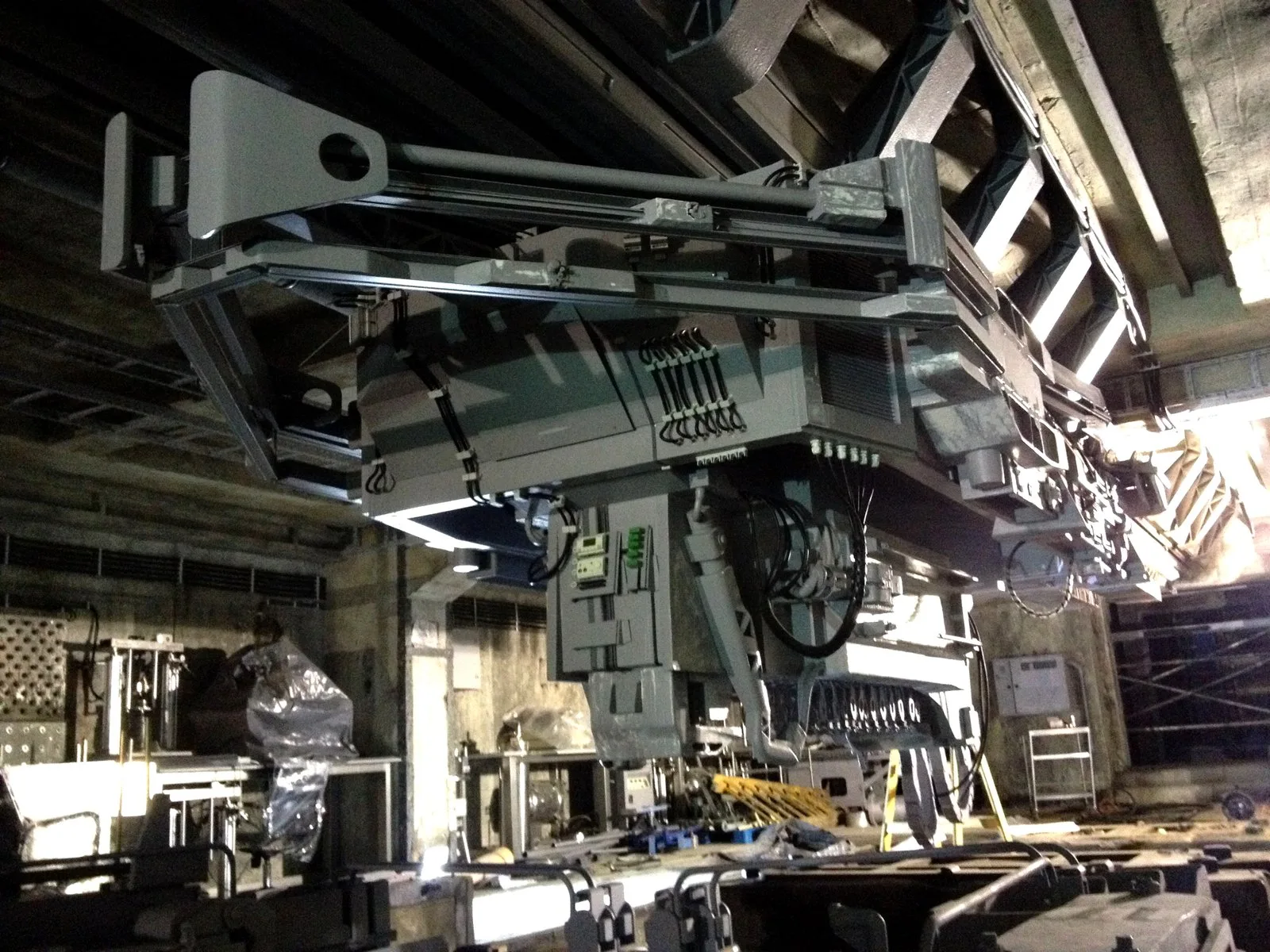
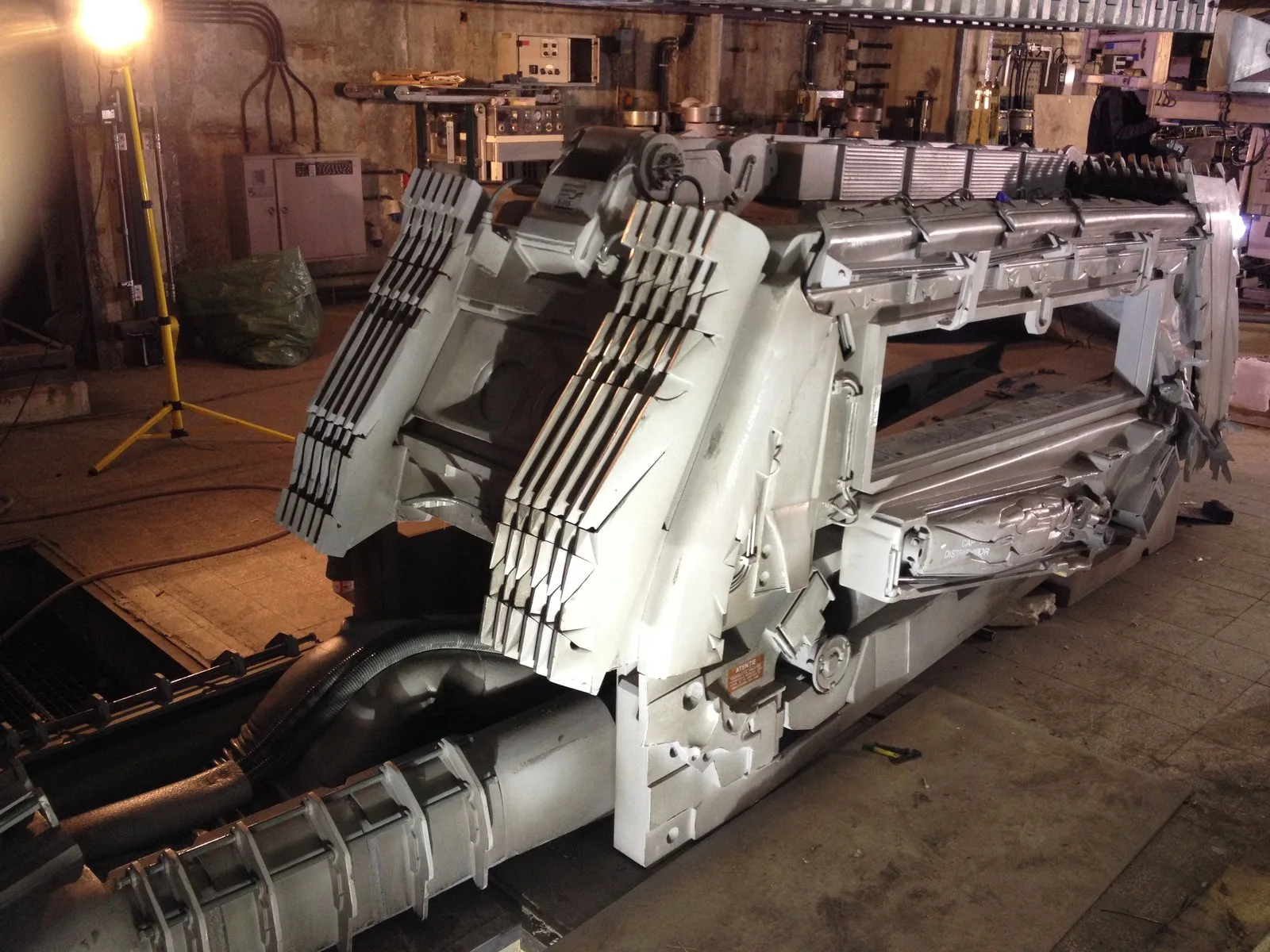
Cloning machine, equestrian statues - sculpture and painting workmanship
Building the Impossible: The Four Horsemen of Spectral
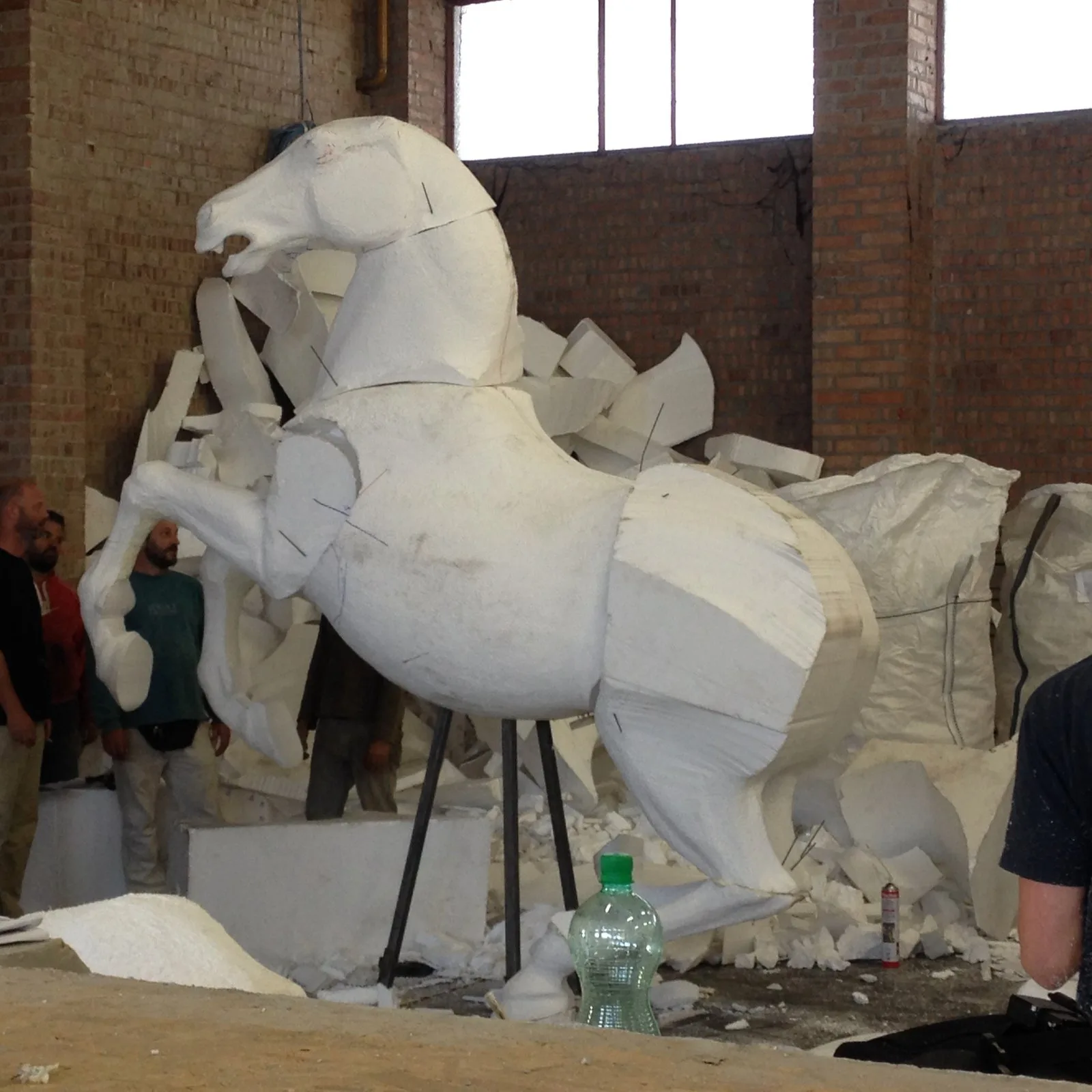
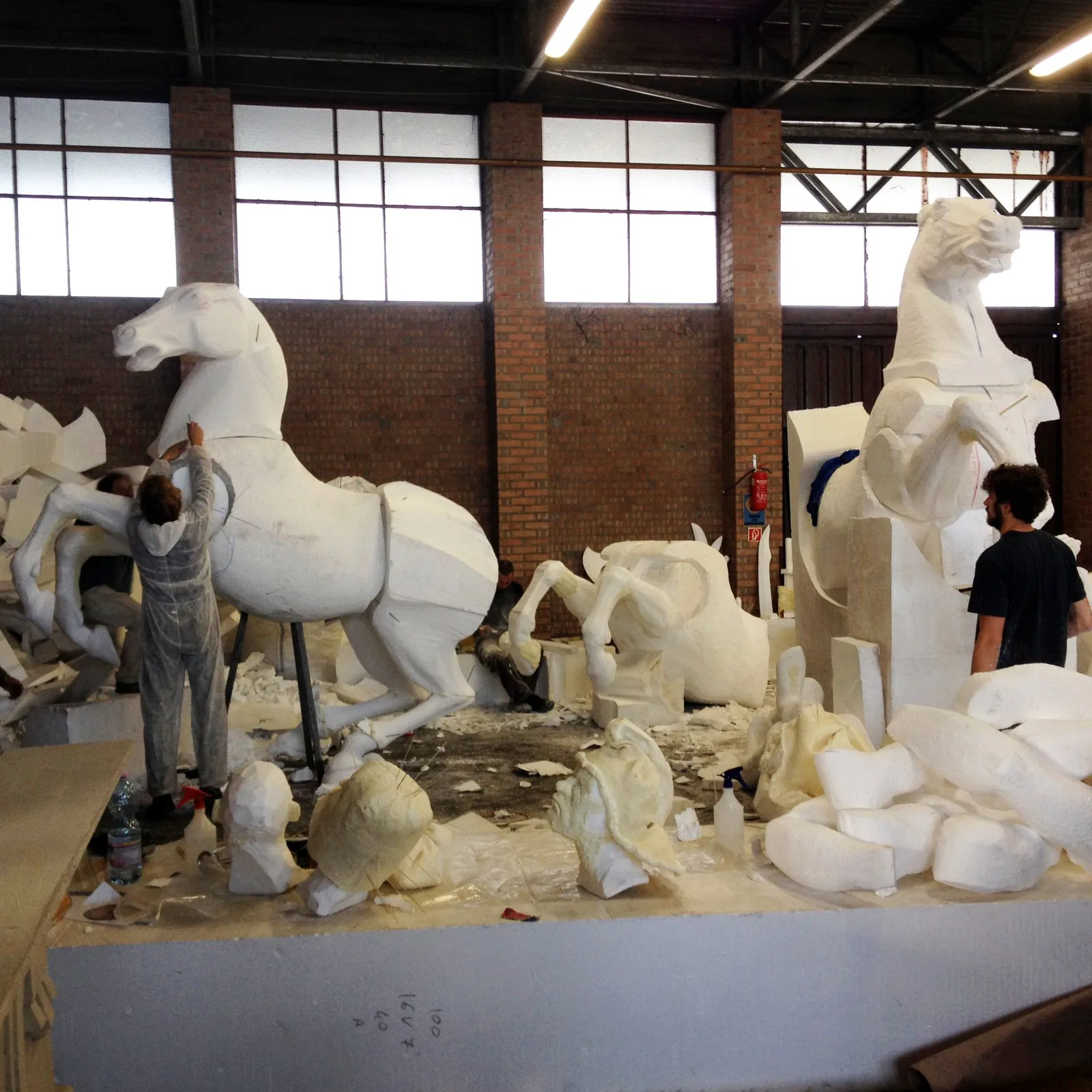
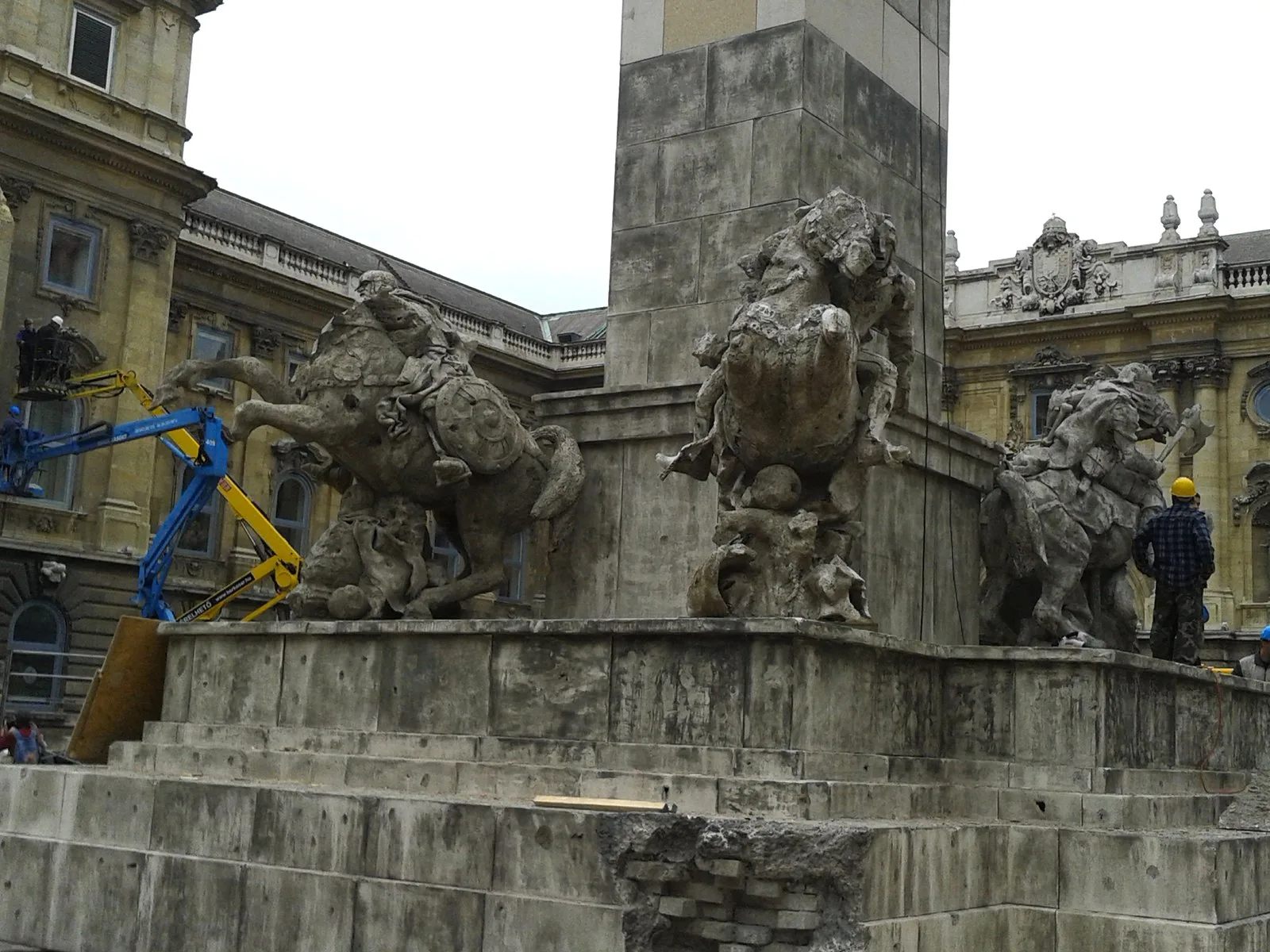
The brief was massive, and the deadline was brutal. For the Netflix sci-fi thriller Spectral, production asked for four larger-than-life equestrian statues. These were not meant to be static, resting figures; the brief demanded highly dynamic, armoured warriors in active combat. Scaled to one-and-a-half times life size, the figures stood 380 cm high to the horse's ear or the warrior's weapon, whichever reached higher.
The initial timeline floated was twenty-five days. By the time the team sat down to pitch, the contract had tightened to twenty days to deliver all four statues, weekends included.
The Room
The sculptors were given a week to produce maquettes. When Barna walked into the meeting, three scale models sat on the table. One of them was built from a polystyrene core smeared with wax. Because wax at 2mm is translucent, the white foam core bled straight through the surface, inverting the forms so the deep cuts read as bright and the high ridges fell into dark shadow.
The schedule remained rigid. When production insisted on twenty days for all four massive statues, Barna had to tell them straight: "Impossibile, quattro. Impossibile."
But the deadline was set, leaving Barna with a massive internal struggle. He knew that four massive monuments do not equal the time it takes to build one simply multiplied by four. It was a fundamental problem of methodology. Because the four statues had to read as a unified set, they required the exact same level of finish. A sculptor can either polish one small section immediately to keep a nervous director happy, which guarantees inconsistent quality across the four figures, or build the structural foundations for all four simultaneously.
That proper method means pushing four rough blocks forward equally. It is a terrifying process for a director and art director because it requires absolute, blind trust; the statues look like an unintelligible mess for most of the schedule, and the spectacular final quality is only revealed at the very last minute. Barna knew that if his team worked this proper way, four monuments of this complexity simply could not reach a finish in twenty days using conventional methods.
To deliver the impossible, they had to invent a completely new way to build.
Anatomy of a Horse Statue
Within sculpture, the horse and rider is a genre of its own. Crafting a good rider and a good horse does not guarantee a good statue. The true art lies in the intersection: where the two touch, how the weight sits, and the exact split-second of movement chosen to freeze. A man sitting down and a man standing up require fundamentally different gravitational grounding.
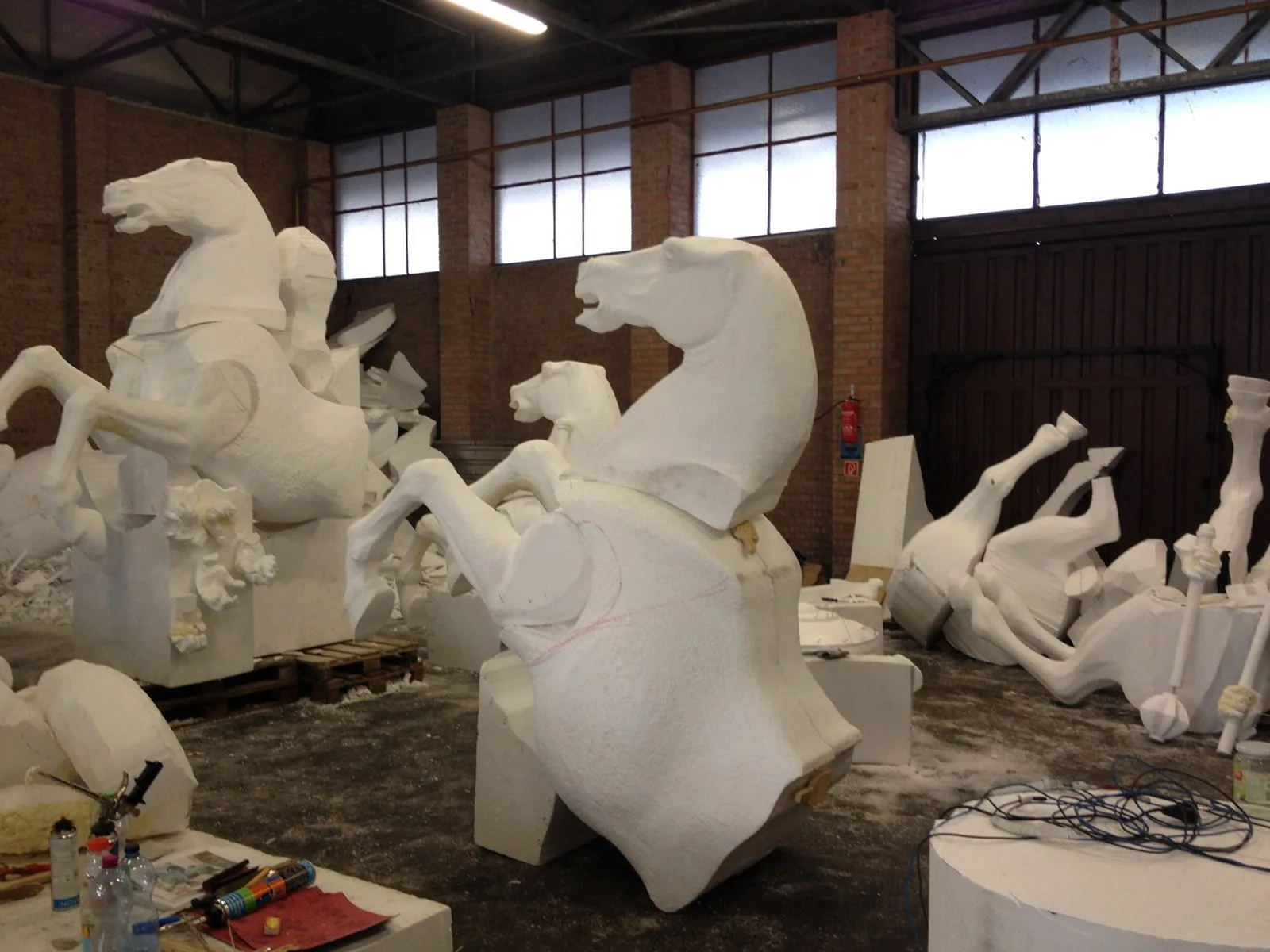
All four of the final designs were completely unique. One wielded a spear, another a sword. One carried Japanese influences, while another was classical and crested. One horse reared up on its hind legs while the soldier attacked from behind. Another captured the exact microsecond a horse threw its rider out of the saddle, the warrior's sword and scabbard suspended in mid-air.
Patterns Over Carved Foam
Conventional drapery at this scale is usually carved directly from solid pieces of polystyrene. Sculptors glue large chunks of foam onto the base structure, carve the folds of the fabric out of it, try to blend the connections, and accept that the result will always look a bit stiff and heavy.
Barna and his team abandoned this carving method entirely. Instead, he drew the exact horse positions and projected them up to the 380 cm scale. Using a technique closer to fashion design, he created flat tailoring patterns for the massive forms. The team built the moving drapery by laying polyurethane foam sheets over foil, drawing them down, and flipping them over. Instead of carving away at rigid chunks of styrofoam, the resulting forms were dynamic, sweeping, and held their own shape.
Underneath, everything was supported by a heavy, welded steel armature. To counterbalance the sheer weight of these massive horses leaning forward on their hind legs, the team designed massive plinths loaded with narrative elements (broken shields, weapons, helmets, and flags) that doubled as vital structural anchors.
Eighteen Days
The crew worked ten to twelve hours a day, seven days a week. They dedicated one team member entirely to historical reference, spending all eighteen days doing nothing but researching and printing out accurate sword types, armour, and horse anatomy for the workshop floor.
During the build, Production Designer Tom Meyer came out to the workshop. He stood completely mesmerized, watching the statues go up for an hour, and kept coming back just to observe the process.
The contract gave them twenty days to do the impossible. Through sheer ingenuity, unconventional materials, and an exceptional crew, Barna's team delivered all four in eighteen.
About Spectral
For those asking where was Spectral filmed, principal photography took place from August 2014 in Budapest, utilizing both Korda Studios and Origo Studios. These Spectral filming locations provided the backdrop for director Nic Mathieu and production designer Tom Meyer, who worked alongside a cast led by James Badge Dale, Max Martini, and Emily Mortimer. The production was mounted by Legendary Pictures, Universal Pictures, Netflix, and the Hungarian service company Mid Atlantic Films. The completed feature was later acquired by Netflix from Legendary and released globally in 2016.